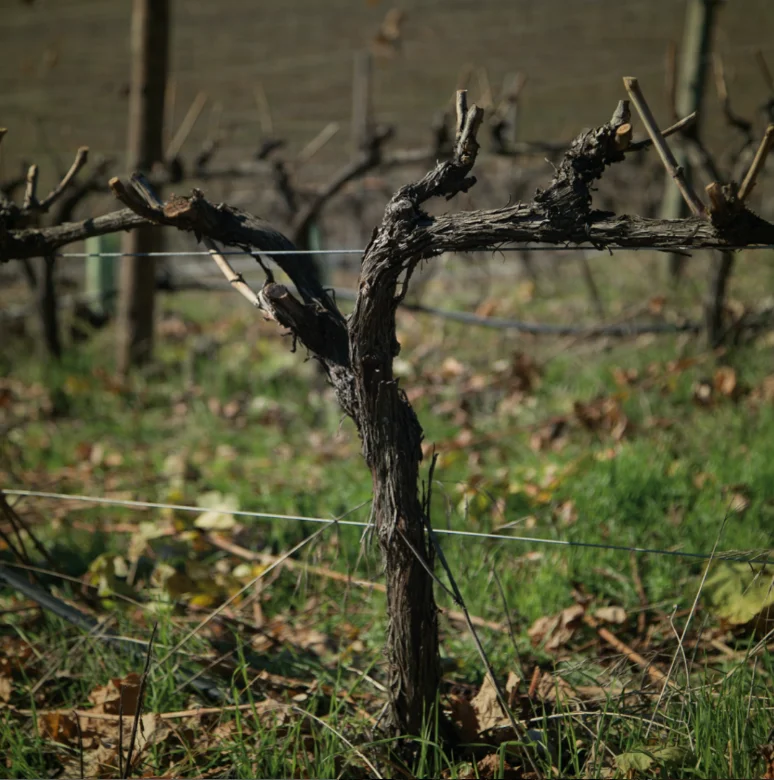
The life cycle of the vine, known as the vine’s phenological cycle, is a sequence of stages that begins in winter with dormancy and ends with dormancy the following winter. This cycle is an annual process that is fundamental to the production of high-quality grapes, during which each stage plays a crucial role in the development of the grapes and the final quality of the wine.
After the harvest season, when the grapes have been picked, the arrival of the colder months marks the start of the vine’s dormant period. A number of physiological and biological changes then take place to ensure the plant’s survival in the harshest winter conditions.
Find out here what happens to the vine at this stage:
1. Leaf fall: In autumn, vines undergo a process known as senescence, during which the leaves begin to change colour and eventually fall. This is a natural process and an adaptation by the plant to conserve energy during the winter, as the leaves are no longer needed for photosynthesis.
2. Reduced metabolism: The vine slows down its metabolic processes to conserve energy, with a reduction in respiration and growth activity, such as the production of new shoots and the elongation of branches.
3. Accumulation of reserves: Before entering dormancy, the vine stores nutrients in its roots and stems, which are essential for the plant’s future growth. Carbohydrates and other compounds are directed to parts of the plant that will be protected during the winter.
4. Cold tolerance: As temperatures drop, the vine develops greater cold tolerance through biochemical and physiological adaptations in its cells, such as a reduction in water content within the tissues and an increase in the concentration of solutes within the cells.
5. Breaking dormancy: The breaking of dormancy is influenced by the accumulation of chill hours, during which dormant buds begin to prepare for budbreak. This is a crucial period for grape production in the coming season, as the end of dormancy determines the timing and uniformity of budbreak.
The dormant period is therefore vital to the vine’s life cycle, ensuring its survival and contributing significantly to the production of high-quality grapes and fine wines.
Share: